Area Real Estate News & Market Trends

You’ll find our blog to be a wealth of information, covering everything from local market statistics and home values to community happenings. That’s because we care about the community and want to help you find your place in it. Please reach out if you have any questions at all. We’d love to talk with you!

Nov. 22, 2022

Should You Update Your House Before You Sell? Ask a Real Estate Professional.

Some Highlights

  • You may be wondering what needs to be renovated before you sell your house. In today’s shifting market, making your house appealing is more important than ever.
  • That’s why it’s essential to lean on a real estate professional who has in-depth knowledge of today’s housing market. They know what buyers are looking for and how to highlight any upgrades you make.
  • Let’s connect so you know where to focus your efforts so your house will stand out in a today’s market.
Posted in Market Updates
Nov. 21, 2022

‘No One Wants To Catch a Falling Knife’: What To Expect in the Housing Market for the Rest of 2022

What a difference just a few months can make. As the year comes to a close, the red-hot housing market has been brought to its knees by soaring mortgage interest rates.

It now appears to be in a standoff as just about everyone suddenly feels stuck. Home prices are beginning to fall from their peaks in some of the nation’s hottest markets—but not enough to make up for the higher mortgage rates. So more and more buyers simply can’t afford to buy. Sellers, who are typically also buyers, don’t want to give up their low mortgage rates to purchase new properties. Renters can’t afford to move. And many new homeowners fear they bought at the peak of a rapidly deteriorating market.

“No one wants to catch a falling knife,” says economist Yelena Maleyev of KPMG US. “No one wants to buy in a market when prices are falling. You want to wait it out.”

So what’s next as 2022 comes to an end? Will mortgage rates continue to rise? Could prices come down even more? And will buyers return to the market?

“There is definitely a belief that home prices will go down. So consumers are saying, ‘Why would I buy now if prices are lower in two months’ time or three months’ time?'” says Ali Wolf, chief economist of Zonda, a real estate consultancy.

“That mindset is freezing the housing market.”

In the past year, mortgage rates have risen from just under 3% to more than 7% for 30-year fixed-rate loans, according to Freddie Mac. That translates into mortgage payments rising by hundreds of dollars more every month. Median monthly mortgage payments are now about 81% higher than they were a year ago, according to a Realtor.com® analysis.

Few buyers, especially first-timers, can afford that sort of increase. Many can no longer qualify for mortgages due to the higher rates, and others are being forced to slash their budgets. Homes are sitting on the market longer, sellers are slashing prices, and sales are stalling. So the pressure is on home prices to come down. And they’re beginning to oblige.

“The housing market is getting crushed,” says Mark Zandi, chief economist at Moody’s Analytics. “Potential first-time homebuyers can’t afford to buy, potential trade-up buyers can’t afford to move. Investors have gone to the sidelines because they know prices are going to fall further.”

How low will home prices go?

Many prospective buyers are eyeing home prices like a game of limbo. How low will they go?

Zandi, from Moody’s Analytics, expects prices will fall nationally by about 10% from peak to trough, bottoming out in the summer of next year. They’ll go down even more in the pandemic hot spots—such as Phoenix; Boise, ID; and Austin, TX—that experienced the biggest run-ups. Prices in these places could drop as much as 20%. Florida, where the demand from buyers is still strong, could hold up a bit better, he says.

“The markets that got most juiced up during the [COVID-19] pandemic are the markets that are going to experience the biggest declines going forward,” says Zandi.

Wolf, of Zonda, expects prices could fall by 15% nationally over the next year. She’s seeing about 40% of builders cutting prices.

However, it’s important to put any price declines into perspective. Nationally, home list prices rose 40.6% in just over two years’ time—from March 2020, when the pandemic lockdowns began, to the peak of the market this past June, according to Realtor.com data. So a 10%, 15%, or even 20% drop over a two-year span isn’t as significant as it might seem at first.

“A really important thing to remember is housing is cyclical,” says Wolf. “We came from a massive run-up in prices, sales, demand in the housing market, and now it’s contracting. This is not new.”

And not everyone is anticipating a dramatic fall in prices.

Lisa Sturtevant, chief economist of the Bright MLS, which covers the mid-Atlantic region, expects prices will come down a bit from their peaks over the summer. But for much of the country, price growth will slow. That means prices won’t rise at such a large clip as they did during the pandemic.

“I don’t anticipate a big price crash,” says Sturtevant.

Rental prices are also poised to slow

The wild rent increases of the past year are also slowing down.

Most renters are struggling to afford the higher price tags, especially as inflation, gas, and other costs have soared. Rents in many places are so high that many young adults can’t afford to move out of their parents’ homes. And now many companies are issuing pink slips, making it even harder for renters to afford these high prices.

Zandi expects that rents will stabilize and could even come down a little in the parts of the country where they went up the most.

“They’ll be weaker in the near term,” he says.

Mortgage rates are poised to rise—but are coming down instead

Mortgage rates are expected to remain high—and could even rise through the end of the year.

This is due to the U.S. Federal Reserve, which has been hammering the housing market by raising its interest rates to combat inflation. When the Fed raises its rates, mortgage rates generally follow. And the Fed is expected to continue jacking up its rates.

However, mortgage rates fell last week after the government showed inflation was still strong but was slowing. That means the Fed will continue raising its rates, but perhaps not as much as previously anticipated. That unexpected optimism explains why mortgage rates were down from 7.22% to 6.62% on Thursday for 30-year fixed-rate loans, according to Mortgage News Daily.

While mortgage rates are still expected to remain high through the rest of the year, many are watching closely to see what they do next.

“The doubling of rates is over,” says Maleyev of KPMG. The housing market will “pick back up when interest rates start to go down again.”

More homes are for sale, but not many new ones are coming on the market

Buyers finally have more options to choose from—just not many new ones they haven’t already seen.

Some sellers, who were planning to list their homes in the next few years, are still going to attempt to unload their properties while prices are still high. Others will need to sell for life reasons, such as needing more space as their families grow or wanting less space as their children leave the nest. There are also those who will move for work or to be closer to family and friends.

“There are always reasons why people have to move, and those moves will still happen,” says Sturtevant. But “if you don’t have to buy a home, you might decide this is not the right time to make that move.”

Most sellers are also buyers. Those who don’t need to move will likely stay put—especially if they have a mortgage. Most homeowners now have loans with rates in the 2% and 3% range. If they purchase a new home, they will need to get a new loan with a rate that’s likely to be at least twice as large. And higher rates can add hundreds, if not more than a thousand, to a monthly mortgage payment.

Plus, many of those who do sell right now are having to cut prices, contribute to buyer closing costs, or make other concessions.

Builders currently have a lot of homes in the pipeline, but they’re beginning to pause construction in the face of fewer buyers. Many are still scarred from the run-up to the Great Recession, where they built more homes than there were buyers for—and then lost their shirts when the downturn happened. Despite the housing shortage, they don’t want a repeat of the housing bust when many companies went under.

That’s going to decrease turnover in the housing market and affect the number of homes sold. Sales have dropped in recent months as a result of all of the turbulence in the housing market. Even investors are now holding off, favoring a wait-and-see approach.

“We’re living through a really unique time in the housing market because we have both a buyer’s strike and a seller’s strike happening at the same time,” says Zonda’s Wolf. “When you have both of those things happening, home sales will inevitably come down.

A recession would weaken the housing market even further

If the nation tips into a full-fledged recession with widespread unemployment, the housing market will fare even worse.

“Recession risks are very high,” says Zandi. He thinks the nation could still avoid one, but just barely. “It’s going to be very close.”

Nationally, home prices could drop 20% during a recession and more in the most “juiced up” markets, says Zandi.

However, real estate experts don’t anticipate a repeat of the Great Recession when home prices crashed, bad mortgages went bust, and foreclosures swept the nation. Since the last bubble popped, most of the subprime mortgages that got homeowners into trouble have been abolished. Lenders have become stricter, and now only the most qualified borrowers are getting approved for mortgages, lessening the risk of another foreclosure crisis.

And unlike during the last crisis, there are more buyers than there are homes for sale.

“Prices will come down, but they’re not going to collapse because there is this shortage of homes,” says Zandi. “That will help ensure the market doesn’t collapse.”

The bright spot of a recession is that, during a downturn, the Fed is more likely to lower rates to stimulate the economy. That would likely lead to falling mortgage rates. Combined with lower home prices, first-time and other buyers could jump back into the housing market.

“This is still a pretty strong economy,” says Padhraic Garvey. He is the regional head of research, Americas, at the multination financial services and banking company ING. “There is a recession risk, but we don’t have the ingredients there for the housing market to crash. Prices won’t collapse off a cliff.”

Posted in Market Updates
Nov. 18, 2022

More People Are Finding the Benefits of Multigenerational Households Today

If you’re thinking of buying a home and living with siblings, parents, or grandparents, then multigenerational living may be for you. The Pew Research Center defines a multigenerational household as a home with two or more adult generations. And the number of individuals choosing multigenerational living has increased over the past 50 years.

As you consider this option for your own home search, know it could help you on your homeownership journey and provide you with other incredible benefits along the way.

Living with Loved Ones Could Help You Achieve Your Homeownership Goals

There are several reasons people choose to live in a multigenerational household, and for many, the arrangement is a personal one. But according to the Pew Research Center, the top reason people choose to live together today is financial.

recent study from Freddie Mac also finds more people are choosing to buy a home together so they can save money in the homebuying process. As the study says:

“. . . an increasing percentage of young adult first-time homebuyers are relying on support from older generations, including their parents, to buy a home together.

For these individuals, combining their resources can help them achieve their dream of buying and owning a home. By pooling their incomes together to make that purchase, they may be able to afford a home they couldn’t on their own.

Other Key Benefits of Multigenerational Living

Not to mention, living in a home with loved ones can have other benefits too, like giving you more quality time to spend together. Darla Mercado, Certified Financial Planner and Markets Editor for CNBC.comexplains how this living arrangement can help on a personal and financial level:

“Residing with relatives can offer advantages . . . you can pool multiple streams of income, for instance. And in households with young children, grandparents can pitch in with child care.

If this sounds like a great option for you, it’s important to work with a trusted real estate professional to discuss your needs. They can help you navigate the process to find the right home for you and your loved ones.

Bottom Line

More people are discovering the benefits of multigenerational living. For the best information and help deciding what’s right for your personal situation, let’s connect and start the conversation today.

Posted in Market Updates
Nov. 17, 2022

Top Questions About Selling Your Home This Winter


There’s no denying the housing market is undergoing a shift this season, and that may leave you with some questions about whether it still makes sense to sell your house. Here are three of the top questions you may be asking – and the data that helps answer them – so you can make a confident decision.

1. Should I Wait To Sell?

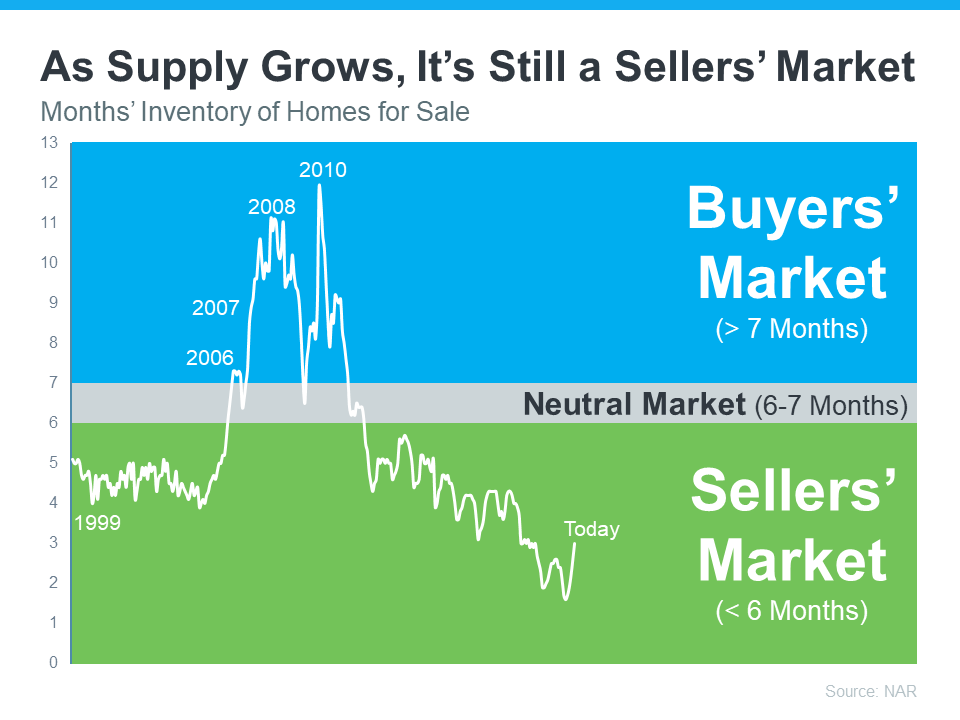
Even though the supply of homes for sale has increased in 2022, inventory is still low overall. That means it’s still a sellers’ market. The graph below helps put the inventory growth into perspective. Using data from the National Association of Realtors (NAR), it shows just how far off we are from flipping to a buyers’ market:

Top Questions About Selling Your Home This Winter | MyKCM

While buyers have regained some negotiation power as inventory has grown, you haven’t missed your window to sell. Your house could still stand out since inventory is low, especially if you list now while other sellers hold off until after the holiday rush and the start of the new year.

2. Are Buyers Still Out There?

If you’re thinking of selling your house but are hesitant because you’re worried buyer demand has disappeared in the face of higher mortgage rates, know that isn’t the case for everyone. While demand has eased this year, millennials are still looking for homes. As an article in Forbes explains:

At about 80 million strong, millennials currently make up the largest share of homebuyers (43%) in the U.S., according to a recent National Association of Realtors (NAR) report. Simply due to their numbers and eagerness to become homeowners, this cohort is quite literally shaping the next frontier of the homebuying process. Once known as the ‘rent generation,’ millennials have proven to be savvy buyers who are quite nimble in their quest to own real estate. In fact, I don’t think it’s a stretch to say they are the key to the overall health and stability of the current housing industry.”

While the millennial generation has been dubbed the renter generation, that namesake may not be appropriate anymore. Millennials, the largest generation, are actually a significant driving force for buyer demand in the housing market today. If you’re wondering if buyers are still out there, know that there are still people who are searching for a home to buy today. And your house may be exactly what they’re looking for.

3. Can I Afford To Buy My Next Home?

If current market conditions have you worried about how you’ll afford your next move, consider this: you may have more equity in your current home than you realize.

Homeowners have gained significant equity over the past few years and that equity can make a big difference in the affordability equation, especially with mortgage rates higher now than they were last year. According to Mark Fleming, Chief Economist at First American:

“. . . homeowners, in aggregate, have historically high levels of home equity. For some of those equity-rich homeowners, that means moving and taking on a higher mortgage rate isn’t a huge deal—especially if they are moving to a more affordable city.” 

Bottom Line

If you’re thinking about selling your house this season, let’s connect so you have the expert insights you need to make the best possible move today.

Posted in Market Updates
Nov. 16, 2022

Why It May Be Time To Add Newly Built Homes to Your Search


If you put a pause on your home search because you weren’t sure where you’d go once you sold your house, it might be a good time to get back into the market. If you’re willing to work with a trusted agent to consider a newly built home, you may have even more options and incentives than you realize. That may be why the National Association of Home Builders (NAHB) says the share of buyers looking for new construction is increasing:

“According to the quarterly Housing Trends Report, the popularity of new construction homes is continuing to rebound . . .”

Here’s a few reasons more buyers may be drawn to newly built homes.

More Options To Choose from and Potential Builder Incentives

When looking for a home, you can choose between existing homes (those that are already built and previously owned) and newly constructed ones. While the inventory of existing homes has increased this year, it’s still below more typical years like 2019. Currently, according to the National Association of Realtors (NAR), there is a 3.2-month supply at the current sales pace. For reference, a roughly 6-month supply is considered a balanced market, leaving us in a sellers’ market today.

While it’s a smaller segment of the overall inventory of homes for sale, the supply of newly built homes has grown even more. The National Association of Home Builders (NAHB) explains:

New single-family home inventory remained elevated at a 9.2 months’ supply (of varying stages of construction). A measure near a 6 months’ supply is considered balanced.”

Here’s why this matters for you. While you have more homes to choose from in either category, there’s one extra benefit of newly built homes. Because the inventory of newly built homes has grown so much, builders are motivated to sell their properties before they build more.

Back in the housing crash of 2008, builders were building too many homes, and that oversupply is part of what contributed to the housing bubble bursting. Now, builders don’t want to have a surplus of inventory in their pipeline, and many are offering buyers incentives to help move that inventory along. As Doug Duncan, Chief Economist at Fannie Maeexplains:

“. . . a continual increase in the number of completed homes available for sale is now occurring, with the inventories of such homes now at the highest level since July 2020. . . . This suggests to us that builders may be increasingly willing to offer more aggressive incentives and discounts to maintain sales of completed inventory.”

While specifics will vary by builder and market, some buyers are seeing builders reduce prices and offer incentives. To find out what’s available in your area, lean on a trusted real estate professional.

Lifestyle Benefits of Buying a Newly Built Home

In addition to more supply and the potential for builder incentives, newly built homes have various benefits that may suit your lifestyle. For example, you likely won’t have as many little repairs to tackle, like leaky faucets, shutters to paint, and other odd jobs around the house. That can free up time for you to do other things you’re passionate about.

Another perk of a new home is that nothing in the house is used. It’s brand new and uniquely yours from day one. You’ll have all new appliances, windows, roofing, and more. These things can help lower your energy costs, which can add up to significant savings over time. You may even have the latest and greatest technology features built into your new home.

Builder sums up why some buyers today are turning to newly built homes:

“For some, it’s the lure of something new and modern. For others, it’s the move-in ready experience. And now there’s another factor to consider when making this decision: technology.”

If any of these benefits appeal to you, it’s time to connect with a trusted real estate advisor to learn more.

Bottom Line

If you’re considering a newly built home, let’s connect so you have an expert guide on what’s available in our local market. Together we’ll explore your options and the benefits of an all-new home.

Posted in Market Updates
Nov. 15, 2022

Home Equity: A Source of Strength for Homeowners Today


Experts agree there’s no chance of a large-scale foreclosure crisis like we saw back in 2008, and that’s good news for the housing market. As Mark Fleming, Chief Economist at First American, says:

“. . . don’t expect a housing bust like the mid-2000s, as lending standards in this housing cycle have been much tighter and homeowners have historically high levels of home equity, so there likely won’t be a surge in foreclosures.”

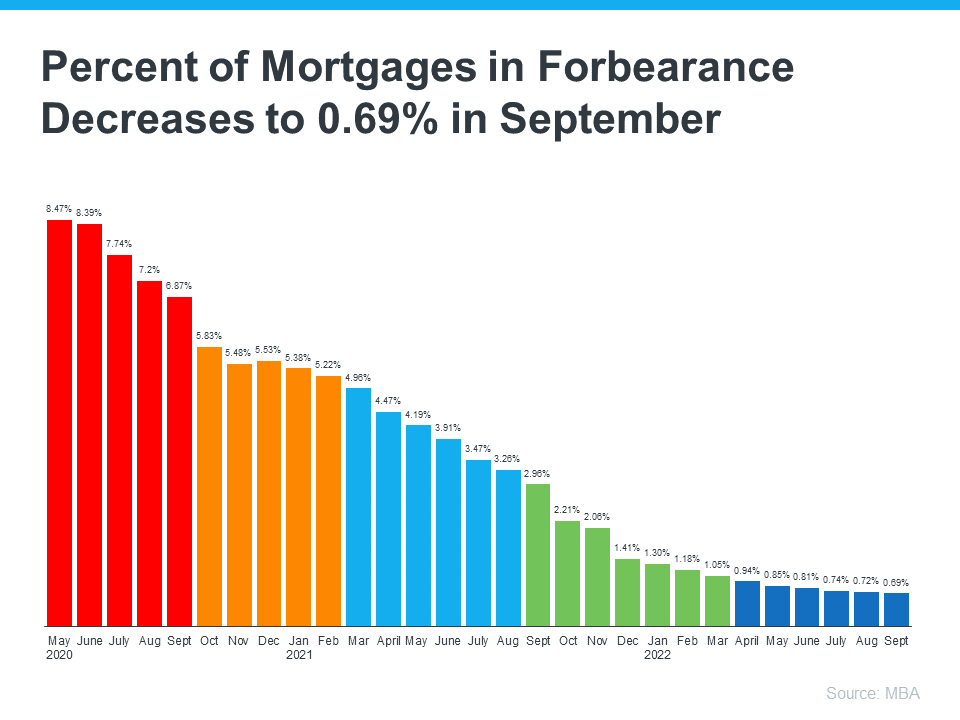
Data from the Mortgage Bankers Association (MBA) helps tell this story. It shows the overall percentage of homeowners at risk is decreasing significantly with time (see graph below):

Home Equity: A Source of Strength for Homeowners Today | MyKCMBut even though the volume of homeowners at risk is very low, there is still a small percentage of homeowners who may be coming face to face with foreclosure as a possibility today. If you’re facing difficulties yourself, it can help to understand your options. It starts with knowing what foreclosure is. Investopedia defines it like this:

Typically, default is triggered when a borrower misses a specific number of monthly payments . . . Foreclosure is the legal process by which a lender attempts to recover the amount owed on a defaulted loan by taking ownership of and selling the mortgaged property.

The good news is there are alternatives available to help you avoid going through the foreclosure process, including:

  • Reinstatement
  • Loan modification
  • Deed-in-lieu of foreclosure
  • Short sale

But before you go down any of those paths, it’s worth seeing if you have enough equity in your home to sell it and protect your investment.

You May Be Able To Use Your Equity To Sell Your House

Equity is the difference between what you owe on the home and its market value based on factors like price appreciation.

In today’s real estate market, many homeowners have far more equity in their homes than they realize due to the home price appreciation we’ve seen over the past few years. According to CoreLogic:

“The total average equity per borrower has now reached almost $300,000, the highest in the data series.”

So, what does that mean for you? If you’ve lived in your house for at least a few years or more, chances are your home’s value, and your equity, has risen dramatically. In addition, the mortgage payments you’ve made during that time chipped away at the balance of your loan. If your home’s current value is higher than what you still owe on your loan, you may be able to use that increase to your advantage.

Rick Sharga, Executive VP of Market Intelligence at ATTOM Dataexplains how equity can help:

“Very few of the properties entering the foreclosure process have reverted to the lender at the end of the foreclosure. . . We believe that this may be an indication that borrowers are leveraging their equity and selling their homes rather than risking the loss of their equity in a foreclosure auction.”

Lean on Experts To Explore Your Options

To find out how much equity you have, work with a local real estate professional. They can give you an estimate of what your house could sell for based on recent sales of similar homes in your area. You may be able to sell your house to avoid foreclosure.

If you find out you have to pursue other options, your agent can help with that too. They’ll be able to connect you with other professionals in the industry, like housing counselors, who can look into your unique situation and offer advice on next steps if selling isn’t your best alternative.

Bottom Line

If you’re a homeowner facing hardship, let’s connect so you have an expert on your side to explore your options and see if you can sell your house to avoid foreclosure.

Posted in Market Updates
Nov. 14, 2022

VA Loans: Making Homes for the Brave Achievable


Some Highlights

  • VA Loans can help make homeownership possible for those who have served our country.
  • These loans offer great benefits for eligible individuals and can help them buy a VA-approved house or condo, build a new home, or make improvements to their house.
  • Homeownership is the American Dream. One way we can honor and thank our veterans is to ensure they have the best information about the benefits of VA home loans.
Posted in Market Updates
Nov. 11, 2022

VA Loans Can Help Veterans Achieve Their Dream of Homeownership


For over 78 years, Veterans Affairs (VA) home loans have provided millions of veterans with the opportunity to purchase homes of their own. If you or a loved one have served, it’s important to understand this program and its benefits.

Here are some things you should know about VA loans before you start the homebuying process.

What Are VA Loans?

VA home loans provide a pathway to homeownership for those who have served our nation. The U.S. Department of Veterans Affairs describes the program like this:

“VA helps Servicemembers, Veterans, and eligible surviving spouses become homeowners. As part of our mission to serve you, we provide a home loan guaranty benefit and other housing-related programs to help you buy, build, repair, retain, or adapt a home for your own personal occupancy.”

Top Benefits of the VA Home Loan Program

In addition to helping eligible buyers achieve their homeownership dreams, VA loans have several other great benefits for buyers who qualify. According to the Department of Veteran Affairs:

  • Qualified borrowers can often purchase a home with no down payment.
  • Many other loans with down payments under 20% require Private Mortgage Insurance (PMI). VA Loans do not require PMI, which means veterans can save on their monthly housing costs.
  • VA-Backed Loans often offer competitive terms and mortgage interest rates.

A recent article from Veterans United sums up just how impactful this loan option can be:

“For the vast majority of military borrowers, VA loans represent the most powerful lending program on the market. These flexible, $0-down payment mortgages have helped more than 24 million service members become homeowners since 1944.”

John Bell, Acting Executive Director of the Department of Veterans Affairs Loan Guaranty Service, also explains why this program is so powerful:

“It provides early ownership for many people that would not have that opportunity to begin with. Since there’s no down payment, it allows people to hold their wealth and it gives them the ability to have long term financial security by being able to own a house and let that equity grow.”

Bottom Line

Homeownership is the American Dream. Our veterans sacrifice so much in service of our nation, and one way we can honor and thank them is to ensure they have the best information about the benefits of VA home loans. Thank you for your service.

Posted in Market Updates
Nov. 10, 2022

Taking the Fear out of Saving for a Home


If you’re planning to buy a home, knowing what to budget for and how to save may sound scary at first. But it doesn’t have to be. One way to take the fear out of budgeting is understanding some of the costs you might encounter.  And to do that, turn to trusted real estate professionals. They can help you plan your finances and prepare your budget.

Here are just a few costs experts say you can expect.

1. Down Payment

Saving for your down payment is likely top of mind as you set out to buy a home. But do you know how much you’ll need to save? While each situation is different, there’s a common misconception that putting 20% down toward your purchase is required. An article from the Mortgage Reports explains why that’s not always the case:

“The idea that you have to put 20% down on a house is a myth. . . . The right amount depends on your current savings and your home buying goals.”

To understand your options, partner with a trusted real estate professional to go over the various loan types, down payment assistance programs, and what each one requires.

2. Closing Costs

Make sure you also budget for closing costs, which are a collection of fees and payments made to the various people involved in your transaction. Bankrate explains:

Closing costs are the fees you pay when finalizing a real estate transaction, whether you’re refinancing a mortgage or buying a new home. These costs can amount to 2 to 5 percent of the mortgage so it’s important to be financially prepared for this expense.”

The best way to understand what you’ll need at the closing table is to work with a trusted lender. They can provide you with answers to the questions you might have.

3. Earnest Money Deposit

If you want to cover all your bases, you can also consider saving for an earnest money deposit (EMD). An EMD is money you pay as a show of good faith when you make an offer on a house. According to realtor.com, it’s usually between 1% and 2% of the total home price.

This deposit works like a credit. It’s not an added expense – it’s paying a portion of your costs upfront. You’re using some of the money you already saved for your purchase to show the seller you’re committed and serious about their house. Realtor.com describes how it works as part of your sale:

It tells the real estate seller you’re in earnest as a buyer, . . . . Assuming that all goes well and the buyer’s good-faith offer is accepted by the seller, the earnest money funds go toward the down payment and closing costs. In effect, earnest money is just paying more of the down payment and closing costs upfront.”

Keep in mind, an EMD isn’t required, and it doesn’t guarantee your offer will be accepted. It’s important to work with a real estate advisor to understand what’s best for your situation and any specific requirements in your area. They’ll help you determine what moves you should make in the homebuying process to have the greatest success.

Bottom Line

Budgeting for your home purchase doesn’t have to be scary. Let’s connect so you’ll have an expert on your side to answer any questions you have along the way.

Posted in Market Updates
Nov. 9, 2022

What’s Ahead for Mortgage Rates and Home Prices?


Now that the end of 2022 is within sight, you may be wondering what’s going to happen in the housing market next year and what that may mean if you’re thinking about buying a home. Here’s a look at the latest expert insights on both mortgage rates and home prices so you can make your best move possible.

Mortgage Rates Will Continue To Respond to Inflation

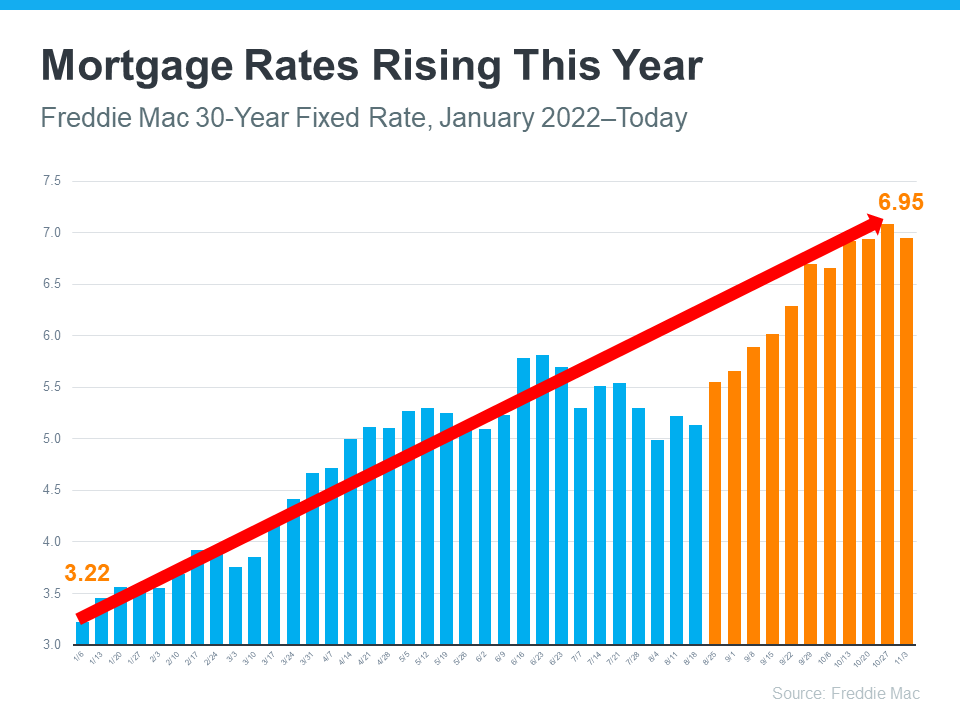
There’s no doubt mortgage rates have skyrocketed this year as the market responded to high inflation. The increases we’ve seen were fast and dramatic, and the average 30-year fixed mortgage rate even surpassed 7% at the end of last month. In fact, it’s the first time they’ve risen this high in over 20 years (see graph below):

What’s Ahead for Mortgage Rates and Home Prices? | MyKCM

In their latest quarterly report, Freddie Mac explains just how fast the climb in rates has been:

“Just one year ago, rates were under 3%. This means that while mortgage rates are not as high as they were in the 80’s, they have more than doubled in the past year. Mortgage rates have never doubled in a year before.

Because we’re in unprecedented territory, it’s hard to say with certainty where mortgage rates will go from here. Projecting the future of mortgage rates is far from an exact science, but experts do agree that, moving forward, mortgage rates will continue to respond to inflation. If inflation stays high, mortgage rates likely will too.

Home Price Changes Will Vary by Market

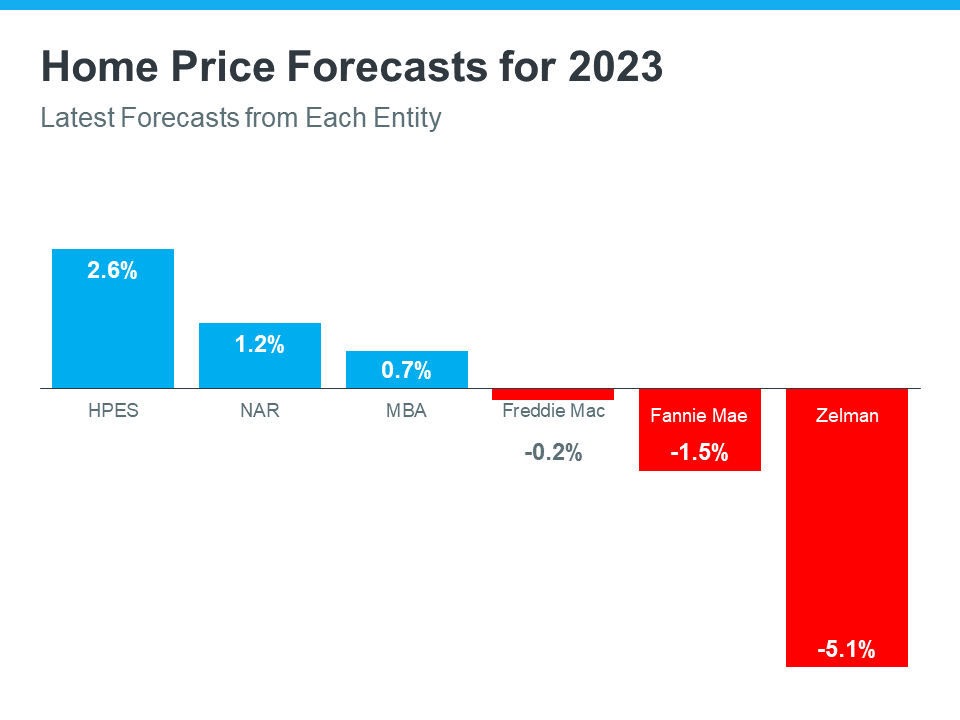
As buyer demand has eased this year in response to those higher mortgage rates, home prices have moderated in many markets too. In terms of the forecast for next year, expert projections are mixed. The general consensus is home price appreciation will vary by local market, with more significant changes happening in overheated areas. As Mark Fleming, Chief Economist at First American, says:

“House price appreciation has slowed in all 50 markets we track, but the deceleration is generally more dramatic in areas that experienced the strongest peak appreciation rates.

Basically, some areas may still see slight price growth while others may see slight price declines. It all depends on other factors at play in that local market, like the balance between supply and demand. This may be why experts are divided on their latest national forecasts (see graph below):

What’s Ahead for Mortgage Rates and Home Prices? | MyKCM

Bottom Line

If you want to know what’s happening with home prices or mortgage rates, let’s connect so you have the latest on what experts are saying and what that means for our area.

Posted in Market Updates